
Founder Story
A family trip turned a lifelong idea into a business.
I have been a robot-combat fan since college, back when I was watching the British shows and wondering what it would take to build one myself.
Years later, our family went to see BattleBots in Las Vegas. Everybody loved it. I came home with a thought I could not shake: I have always wanted to do this—and I might finally be able to.
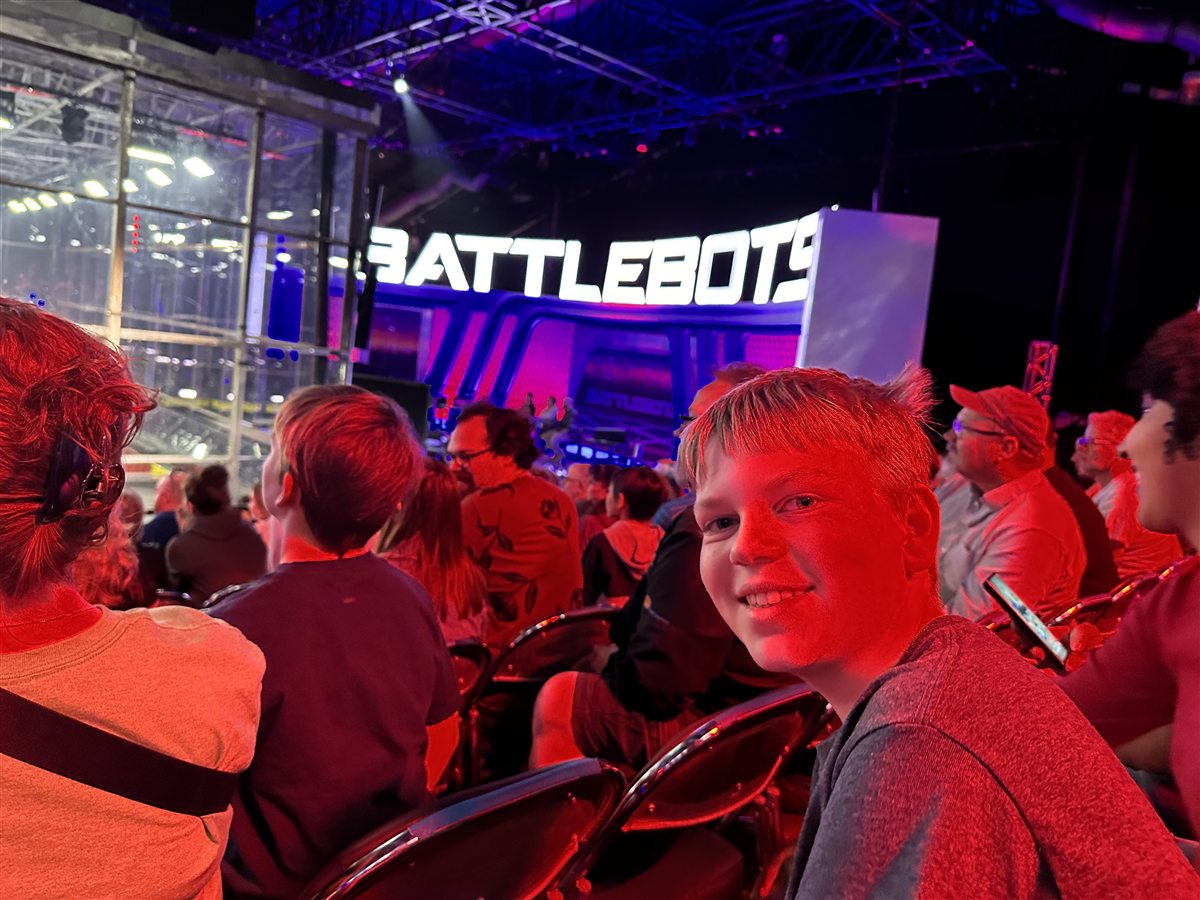
Where it started
From BattleBots to the garage.
After that trip, I designed a mobile arena. Through a local welding program, the enclosure became a senior fabrication project.
The welded cage was completed and delivered. I found a used utility trailer, redesigned it to add height and covered storage, and started turning the two pieces into Riot Robots.
What I had wanted to do for decades was suddenly real—and sitting in my garage.
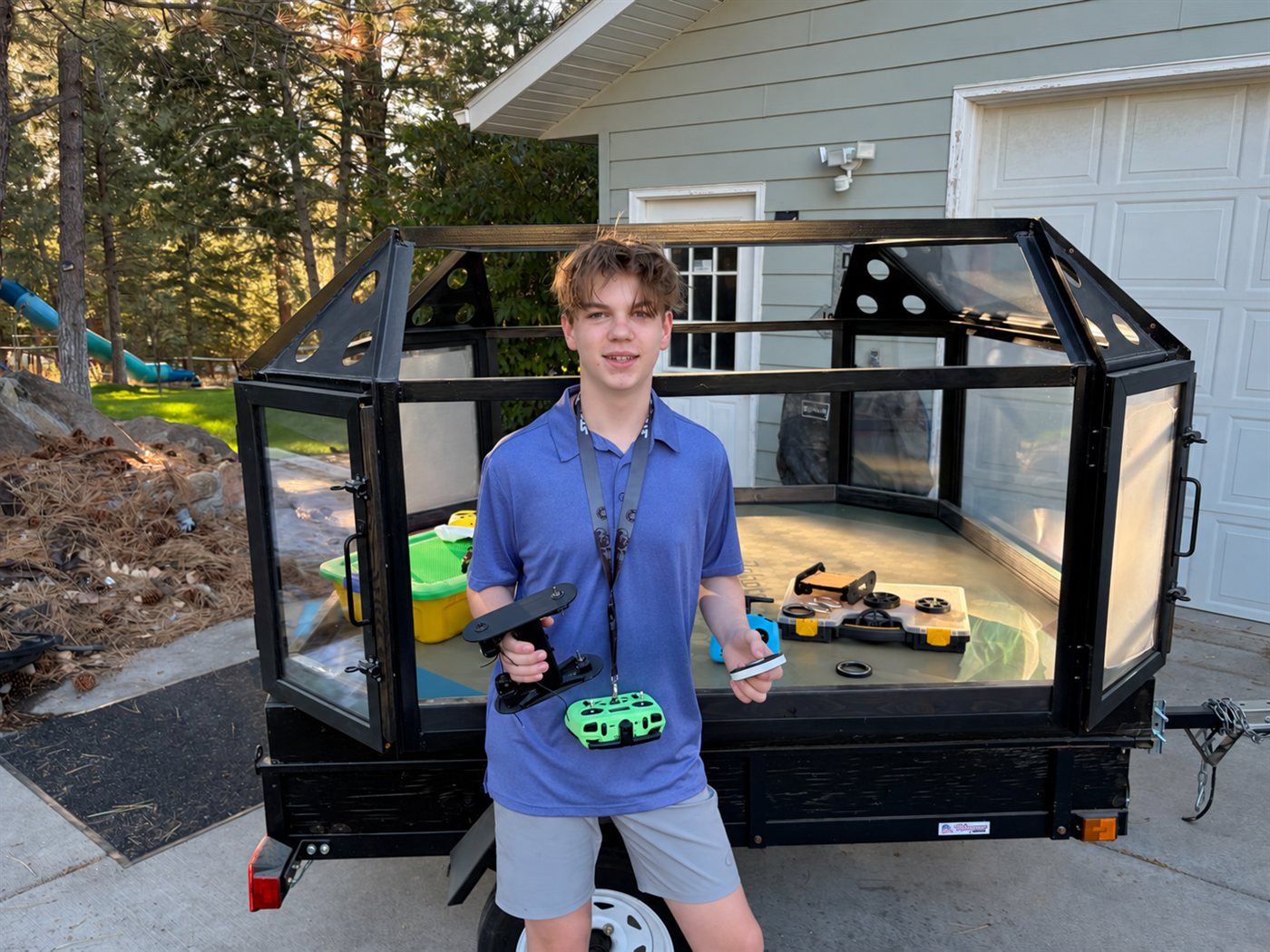
Cooper joins the build
Cooper joins the engineering side.
Riot Robots stopped being only my project when Cooper made it his summer job.
Cooper works on the build side of his school robotics team and has a natural feel for hardware. He began modeling the fighting robots in CAD, working through chassis designs, preparing parts for fabrication, and helping turn the robot fleet from an idea into something we can test.
The current robot is chassis version 0.2: the second design, still a drive base without its weapon system. Cooper is already growing into the engineering-lead role through the CAD, fabrication, prototyping, and hardware work he is doing.
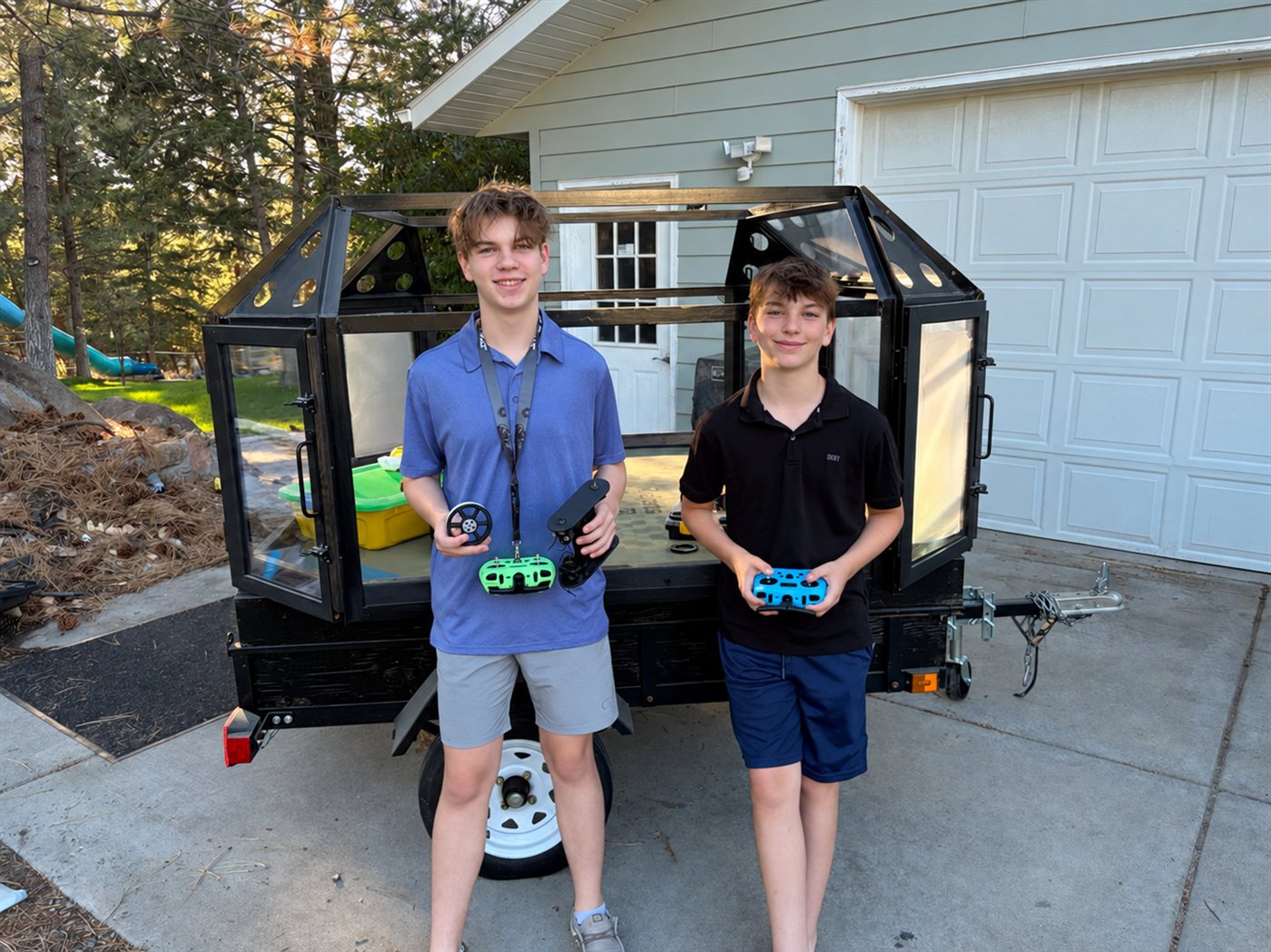
Asher and the platform ahead
Asher is growing toward the digital side.
Asher is a couple of years younger and is drawn to a different part of the problem. He works with AI-assisted coding, game design, graphic design, 3D modeling, and digital assets.
If Riot Robots becomes the path he wants after high school, I can see him shaping robot skins, the website, the player experience, and eventually the software platform needed to support more than one mobile arena.
Cooper is helping build the fleet. Asher may help build the system that lets the fleet grow.
Ronda completes the team
Turning the project into a business.
Ronda has been part of the decisions from the beginning. As the arena and robots become a working product, she brings the finance, compliance, planning, and operational discipline needed to turn a family project into a company that can last.
The four of us bring different strengths: product and systems thinking, hardware engineering, software and creative development, and the business structure that holds it together.
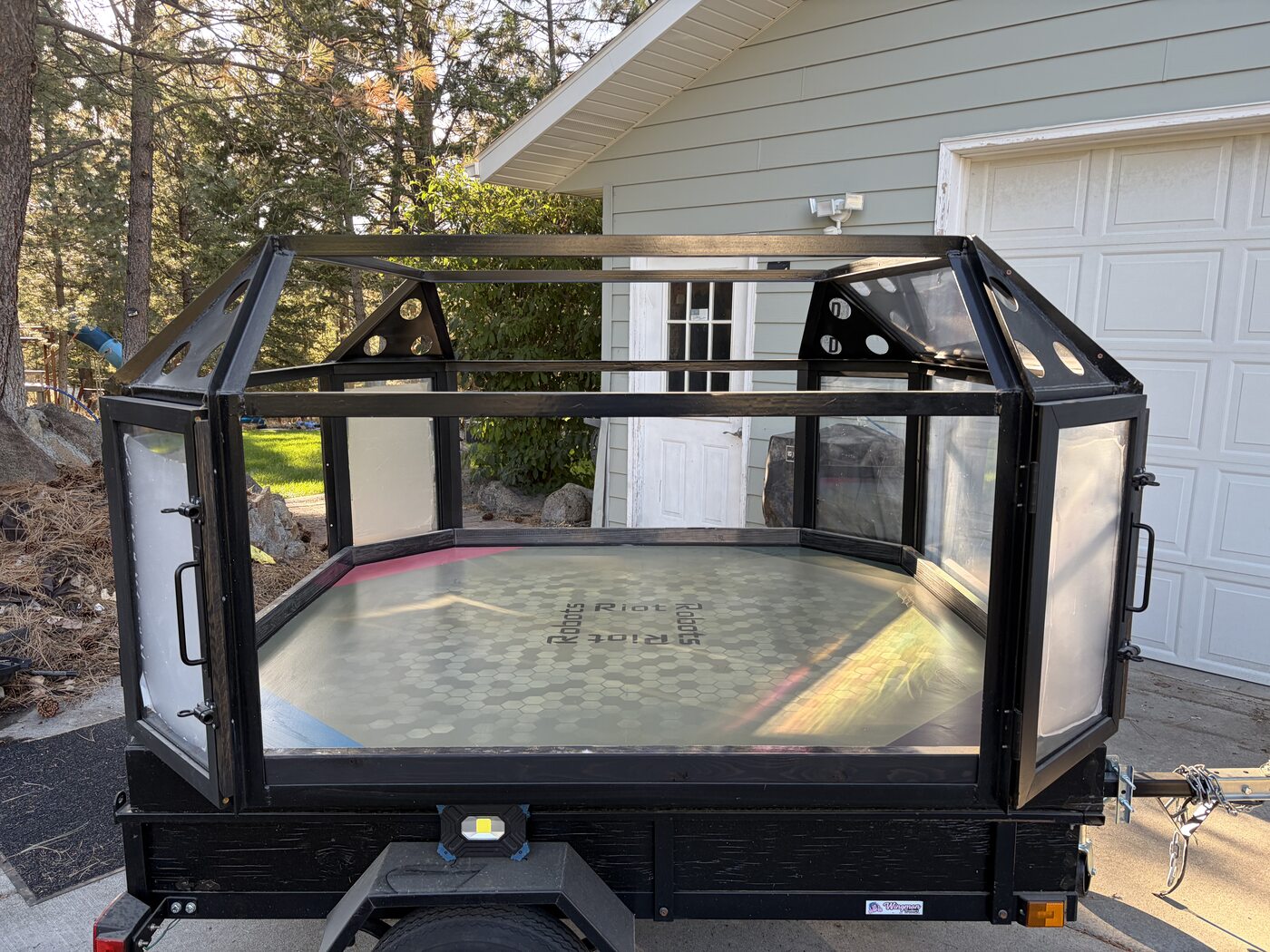
What we are building
For now, we are building the first one.
Riot Robots starts with one mobile arena in Helena, Montana. The immediate goal is simple: finish the enclosure, build a reliable fleet, run great events, and learn from every fight.
The longer-term idea is bigger. We want to create a repeatable robot-combat experience that other operators can bring to their own communities—and a family business the boys can help shape, lead, or carry forward if they choose.