Build Log

Building the first Riot Robots arena.

The first Riot Robots arena began as a used utility trailer and a welded steel cage. It is now in final assembly, with the robot fleet taking shape alongside it.

Here is how the first mobile arena came together—and what is still left before the first fight.

Arena chronology

From utility trailer to mobile arena.

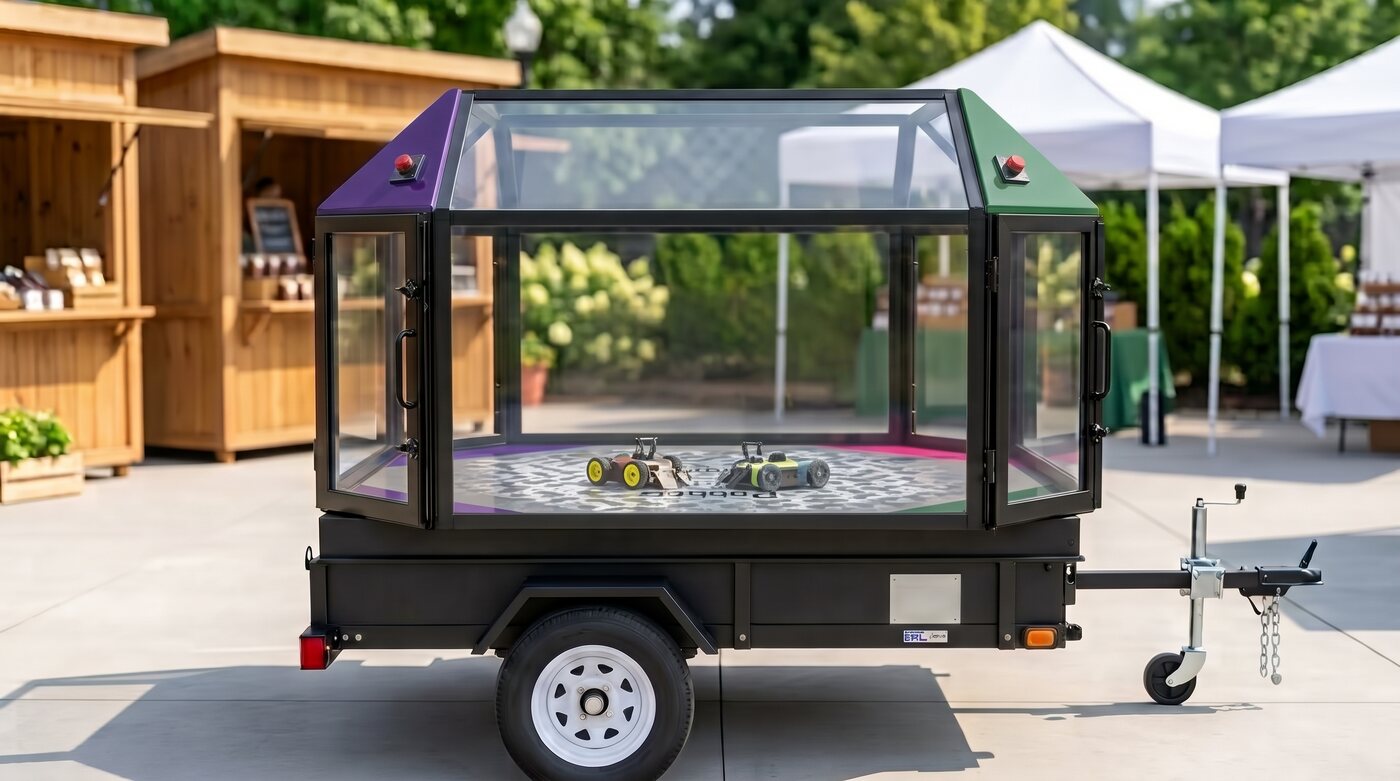
The photographs document the real build; the final milestone shows a concept view of the destination. The enclosure is nearly complete, not complete.

01 · Mobile foundation

A trailer worth building on

The build started with a used open-mesh utility trailer in good condition. It was mobile and structurally sound, but the deck sat too low and offered nowhere to carry the equipment needed to run an event.

The lower frame was boxed in and carpeted to create covered storage for Build-a-Bot Pit parts, event gear, and supplies. That storage base also raised the future arena several feet, putting the action where spectators could see it.
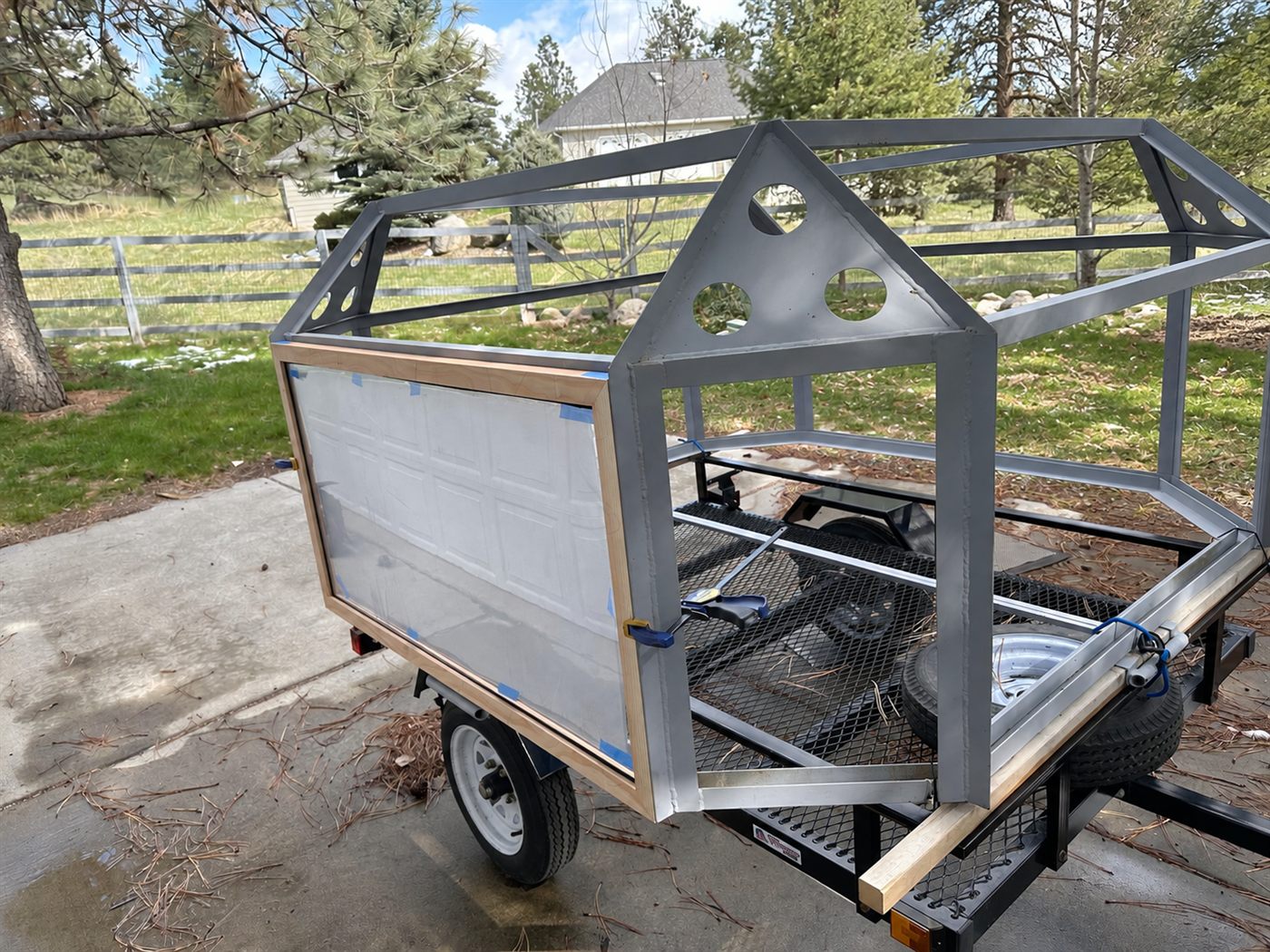
The early welded arena cage mounted on the utility trailer during the first panel test-fitting
02 · Fabrication

The cage arrives

Jason designed the arena enclosure, and a local welding program took it on as a senior fabrication project.

The completed welded cage arrived as a bare steel structure ready to be mounted on the trailer and turned into a working combat enclosure.

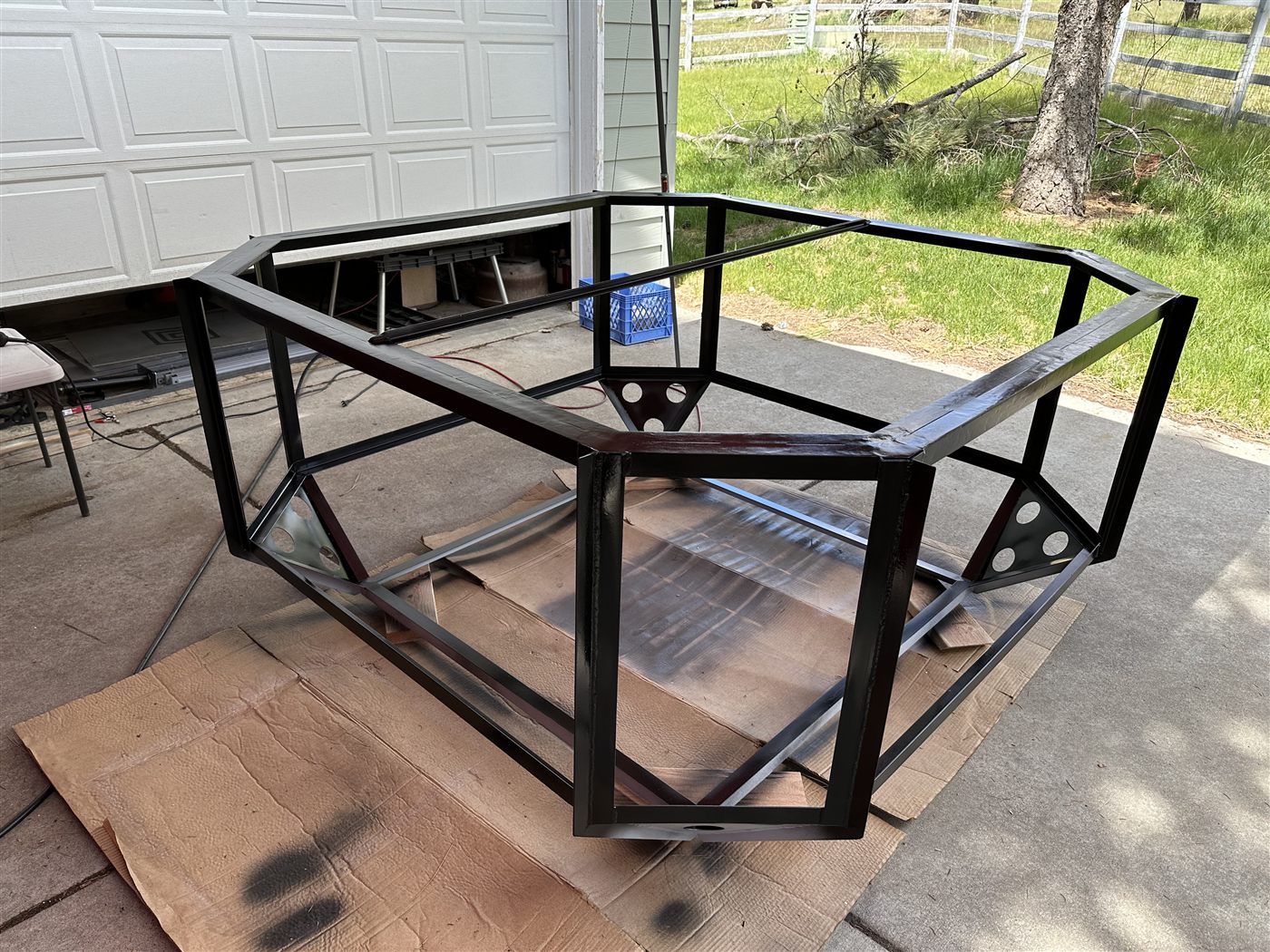
The trailer-mounted arena frame after receiving its protective black finish
03 · Frame finish

Protecting the steel

Once the cage was mounted, the steel was prepared, primed, and painted. Finishing the frame before the wall panels went in protected the structure and established the black arena finish that would carry through the rest of the build.

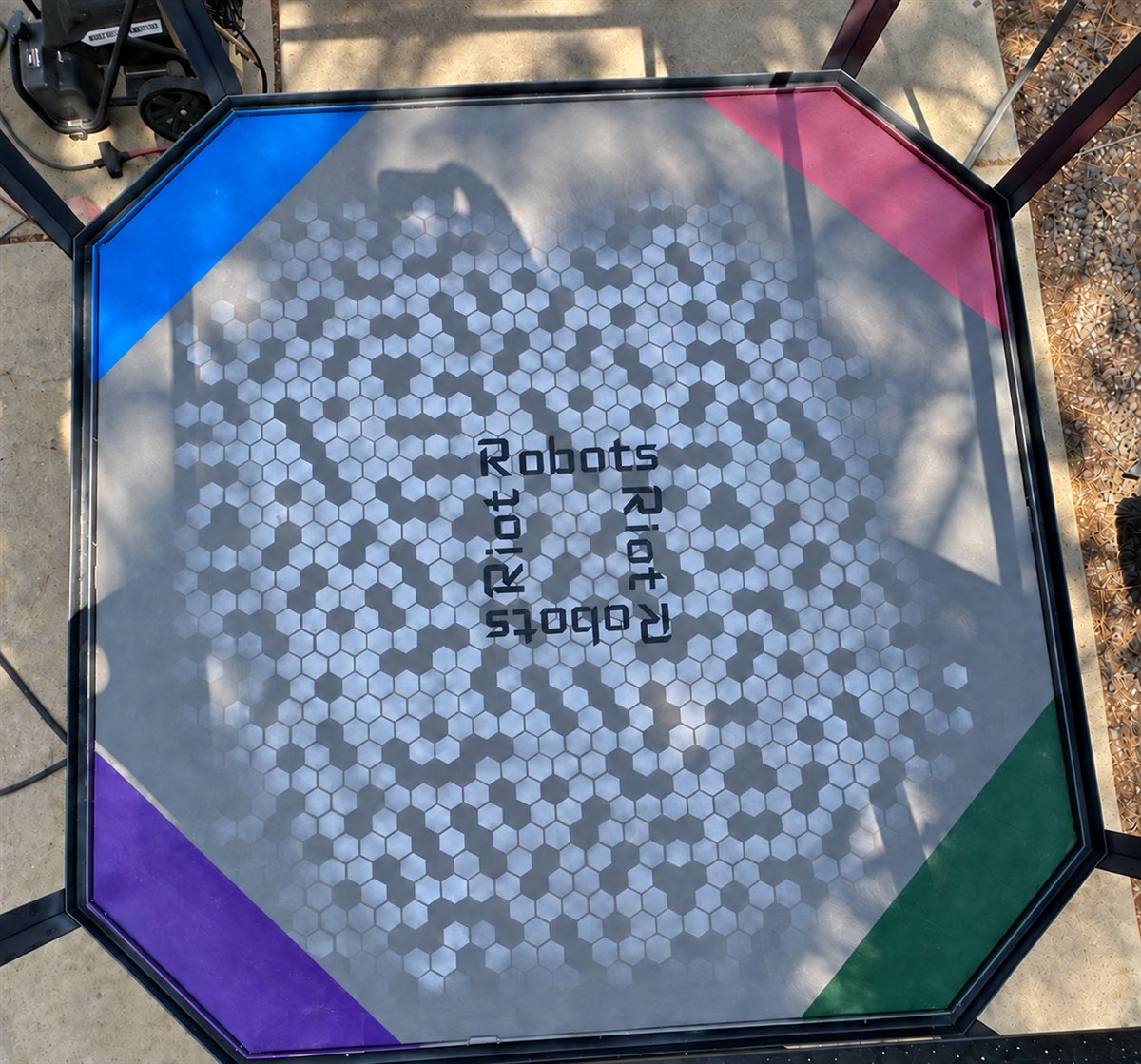
Top-down view of the finished Riot Robots arena floor with custom graphics
04 · Play surface

Building the arena floor

The floor was built to fit the trailer and enclosure, then installed, painted, and finished with custom graphics. This created the first complete visual surface of the arena and established the footprint for the doors, walls, lighting, and robot combat area.

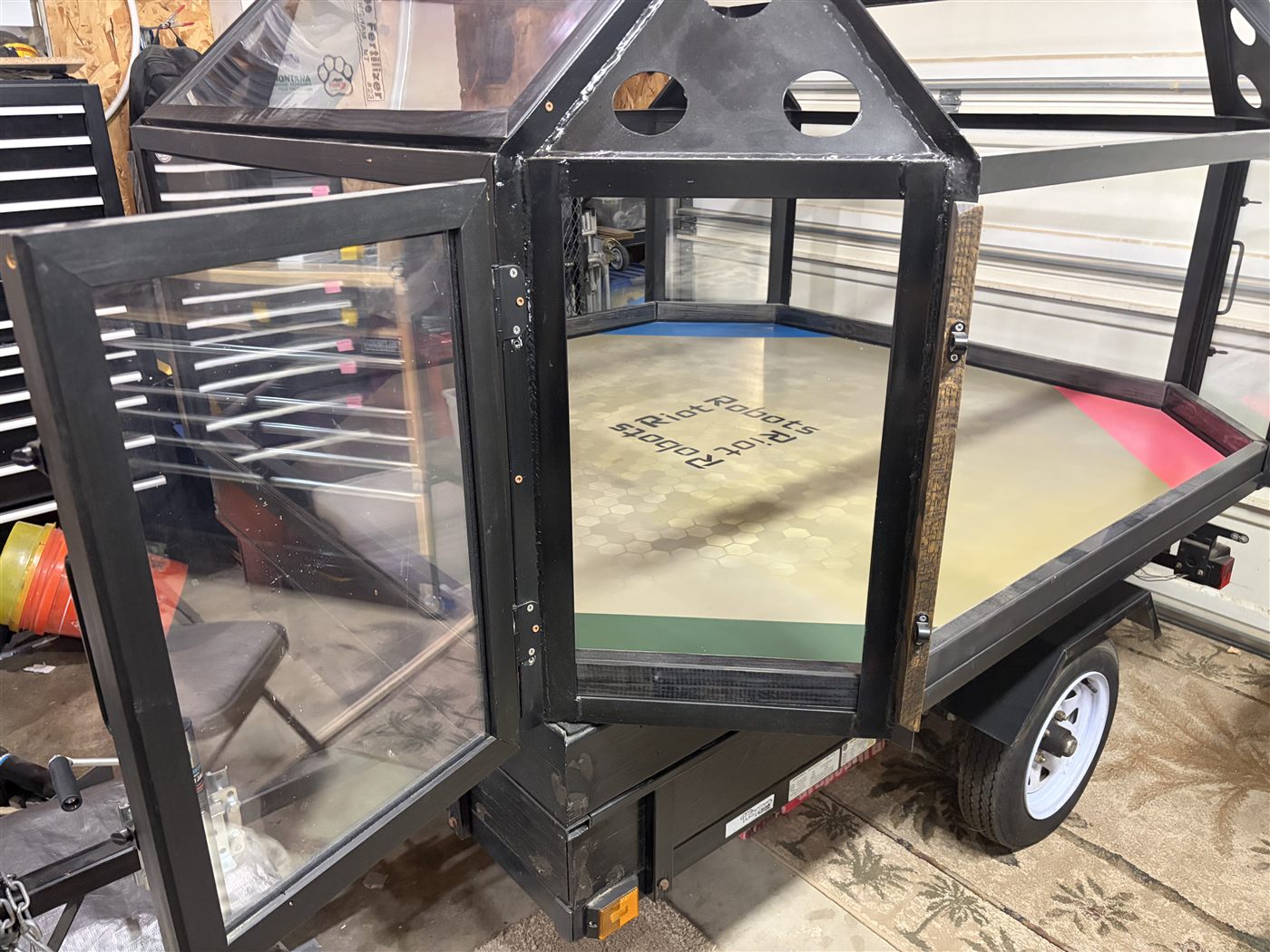
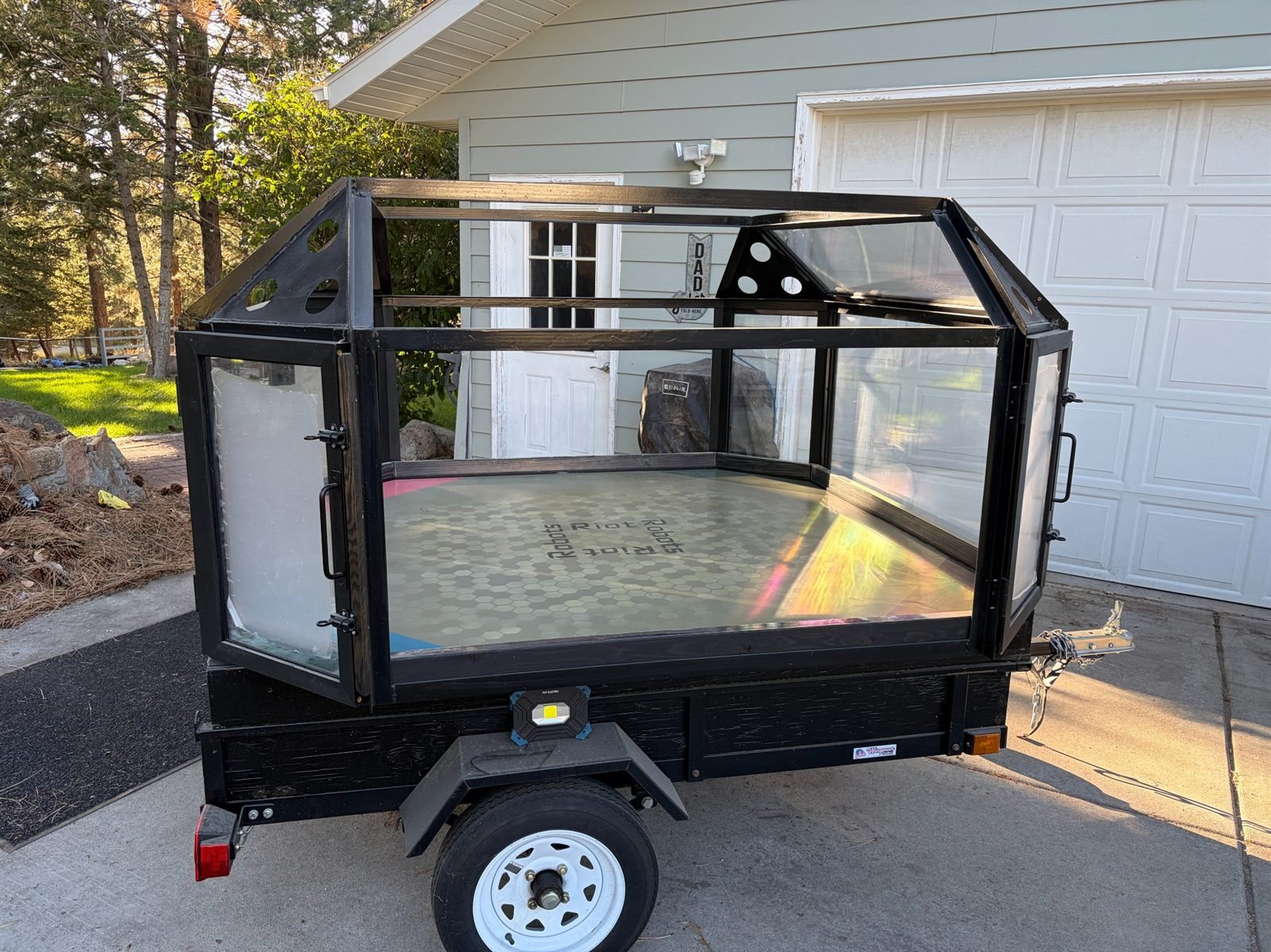
A fitted arena access door open on the trailer-mounted enclosure
05 · Access

Adding arena access

The door system came next. The doors needed to provide practical access for loading robots, clearing the arena, and making repairs while closing securely during a match.

With the doors installed, the enclosure began to function like an arena instead of a frame on a trailer.

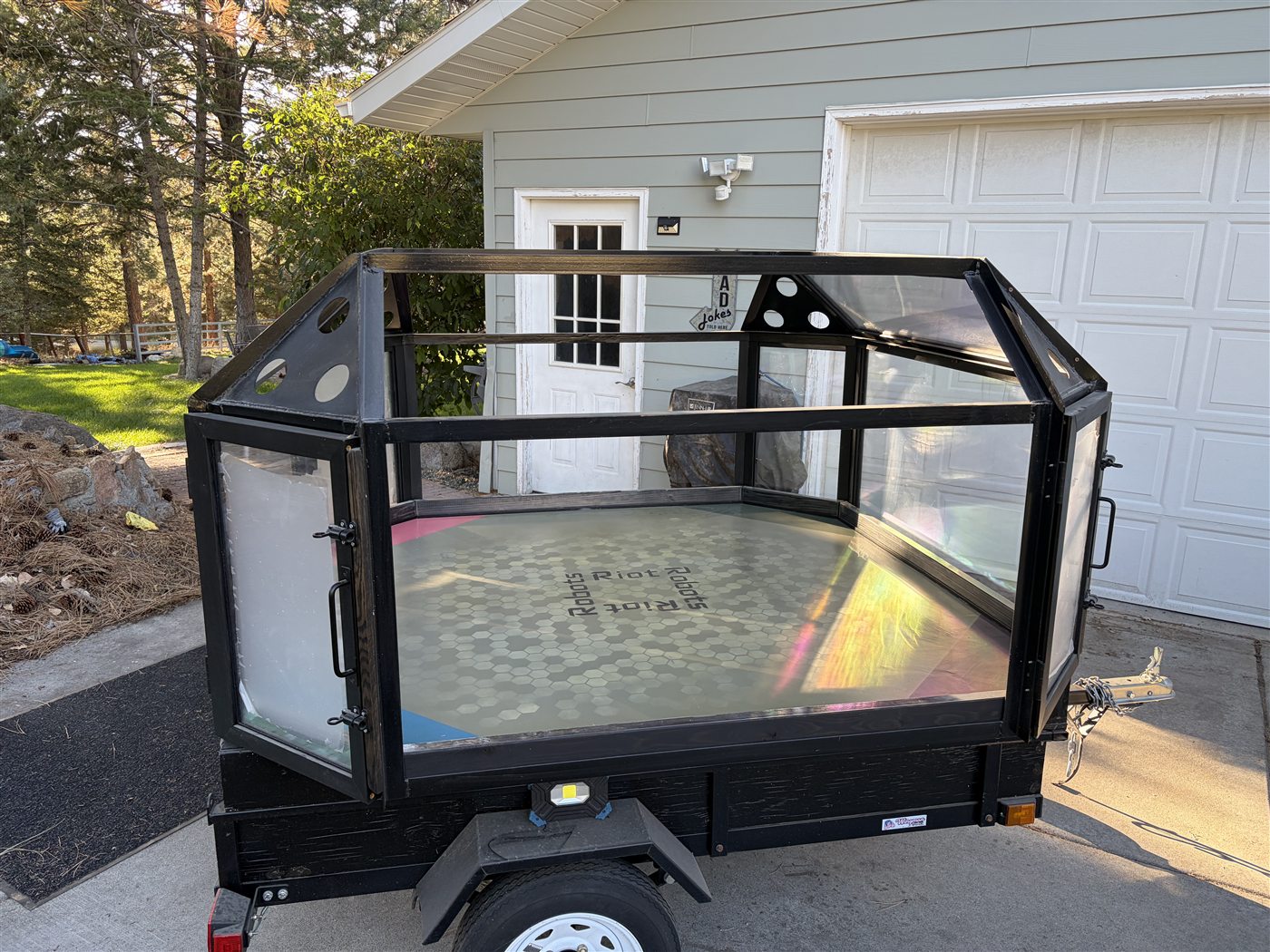
The partially enclosed arena in the family garage with several clear wall sections installed
06 · Enclosure

Building the wall panels

Each lower wall panel uses a painted wood structure with two layers of clear polycarbonate. The polycarbonate can take an impact without shattering, while the panel construction allows damaged sections to be replaced when necessary.

All of the panels have been fabricated. About half are installed, leaving the enclosure visibly close to complete while the remaining side panels are fitted.

07 · Lighting

Lighting the fight

The three openings in the corner structures will hold spotlights and colored arena lighting. A large white light in the upper lid will flood the enclosure from above, keeping the robots visible while reducing reflections on the clear walls.

The backs of the corner structures will be closed with color-coded painted panels to complete the interior finish.

Concept visualization of the completed trailer-mounted Riot Robots arena with its full enclosure and upper lid
Concept visualization
08 · Current stage

The final arena checklist

The remaining work is clear: install the rest of the side panels, complete the lighting system, add the surrender buttons, close the corner structures, and finish the upper lid.

After that, the first event setup will add a portable sound system, folding tables, tents, and an initial Build-a-Bot Pit parts bench. The first version will be practical and one-off; the polished repeatable event system will develop through testing.

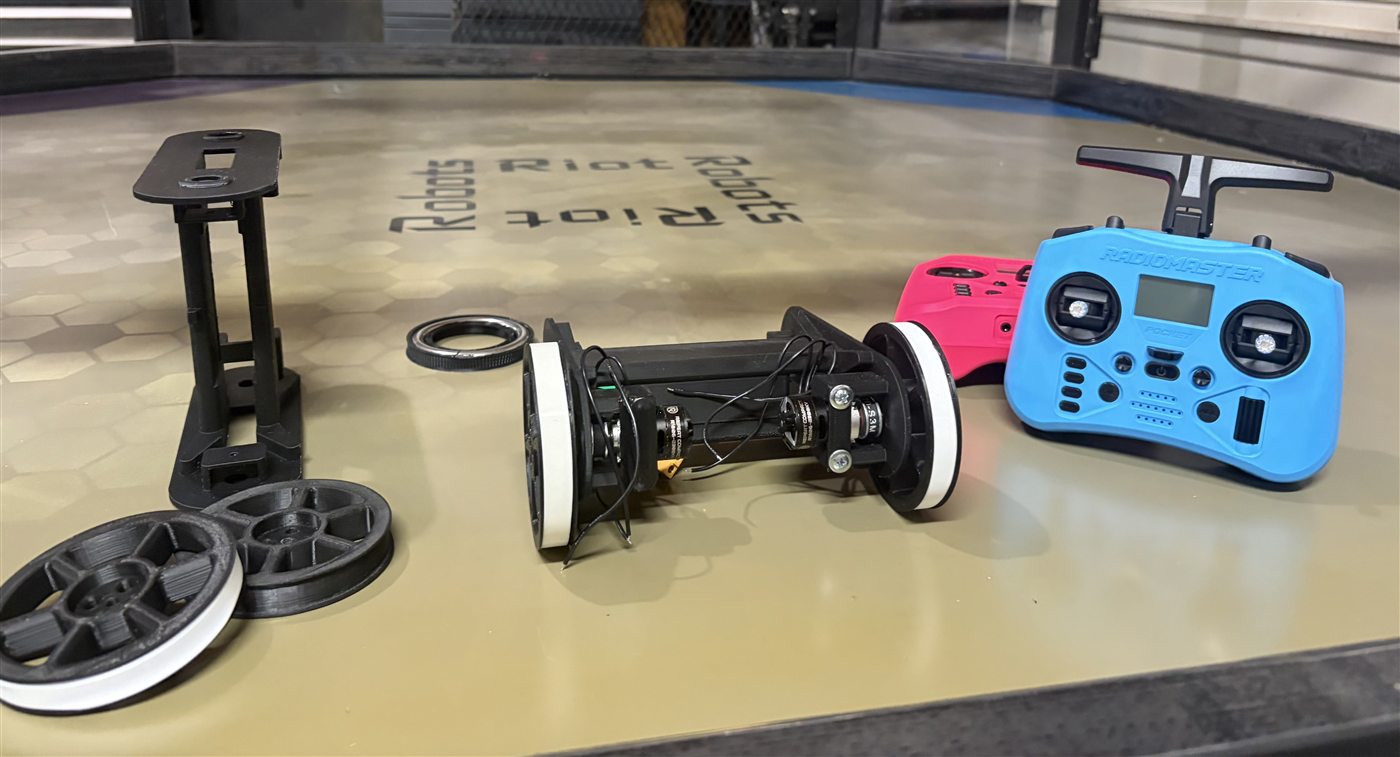
Robot v0.2 drive-base components, spare wheels, frame parts, and controllers arranged inside the arena

Robot development

Robot v0.2 is on the bench

The arena is only half of Riot Robots. Cooper has designed the second robot chassis in CAD, and the first prototype parts are being built and 3D printed.

Version 0.2 is currently a drive base only. It has no weapon system yet. The parts are on site, and the goal is to turn the CAD model and early prototypes into a working fighting robot this winter.